15 MIN READ

Construction Partnering: Reduce Costs and Prevent Disputes on Your Projects

What is Construction Partnering?

Construction partnering is a collaborative project delivery methodology that unites project owners, consulting engineers, architects, general contractors and critical stakeholders in a shared commitment to transparency, trust, and proactive communication. This approach aligns goals, minimizes disputes, controls costs, and delivers complex projects more efficiently.

In the 1980s, litigation surged across the industry, consuming time, money, and energy. Legal conflicts often brought projects to a standstill, affecting small community initiatives and multi-billion-dollar developments alike. Traditional, siloed approaches frequently led to delays, higher costs, and project disputes. To address this, industry leaders developed construction partnering—a proactive strategy to prevent conflicts, mitigate risks, and keep projects on schedule and within budget.

Moreover, construction partnering is recognized by the Construction Industry Institute and leading organizations as a best practice across the industry. By 2026, it has become a standard proactive management approach that defines success through shared goals and aligned outcomes.

Construction Partnering Process

Construction partnering is a long-term commitment among the project owner, builders, designers, and third-party stakeholders to achieve shared goals. It aligns stakeholders early, emphasizes open communication, and fosters collaboration beyond traditional ad hoc approaches.

The process typically includes the following key steps:

Owner Identifies Project Objectives

The project owner defines clear objectives covering performance, cost, schedule, quality, safety, and risk management. They also establish non-negotiables such as safety standards, communication protocols, and decision-making authority.

Selection of Builders and Designers

The owner selects qualified builders and designers who will collaborate as key project stakeholders. Early involvement of these parties ensures alignment on goals and expectations from the outset.

Partnering Agreement and Kickoff

A neutral partnering facilitator leads the kickoff meeting, bringing together all stakeholders to align goals, confirm roles, and establish partnership success goals. This agreement sets the tone for collaboration and accountability before construction begins.

Once the partnering agreement is finalized, the facilitator continues as a neutral anchor. A skilled facilitator acts without bias during discussions and workshops. They foster trust, guide problem-solving, and ensure teams work on issues early, keeping costs controlled and disputes to a minimum.

Partnering for Successful Project Delivery

The initial partnering session is a pivotal moment in the construction partnering process, bringing together all project stakeholders—including the project’s owner, general contractor, consulting engineers, architects, and other key project stakeholders—to establish a positive working relationship and set clear, shared objectives. This collaborative approach breaks down traditional silos, ensuring alignment and commitment to the project’s goals from the very beginning.

It drives excellence and ensures successful completion across a wide range of project types—such as infrastructure, transportation, commercial, and public works projects—and delivery methods, including design-bid-build, design-build, and construction management at risk.

Construction Contracts in a Partnered Environment

While construction partnering itself is not a legal agreement, partnered projects often incorporate contracts that include provisions supporting collaboration. These partnering agreements define project goals, roles, responsibilities, and expected behaviors, creating a shared framework for communication and decision-making.

Such contracts help project teams identify risks early and address issues collaboratively before they escalate into costly disputes or delays. These contracts do more than protect legal interests; they actively support project outcomes by providing a framework that helps the project stay on schedule and within budget, aligned with the owner’s objectives.

Preventing Disputes and Cost Overruns in Partnered Projects

A formal partnering process brings together all project stakeholders from the very beginning—before construction even begins. By aligning all involved parties around shared goals and a structured process, project teams can proactively identify potential risks and develop strategies to address them before they escalate.

One of the most significant benefits of partnering is its ability to foster open communication and cooperation. When teams maintain ongoing dialogue, they can quickly surface and resolve issues, preventing misunderstandings and adversarial relationships. The presence of a partnering facilitator further supports this process by guiding conflict resolution and ensuring that all voices are heard.

The construction industry has seen the benefits of partnering in projects of all sizes, from smaller projects to large-scale infrastructure developments. Organizations like the Army Corps of Engineers have made partnering a standard practice, demonstrating its effectiveness in improving project outcomes, reducing risk, and optimizing project performance.

Key Benefits

Early Risk Identification and Proactive Issue Resolution

Engaging all key stakeholders at the project's outset allows early identification of potential risks preventing escalation into costly disputes or delays.

Enhanced Communication and Escalation

Regular meetings and open dialogue foster transparency and trust, while streamlined communication enables faster issue identification and escalation.

Shared Commitment and Improved Cooperation

Agreement on partnership success goals creates a unified approach prioritizing the project's best interests, building mutual trust and teamwork among design and construction teams, subcontractors, and the owner.

More Opportunities to Innovate

Construction partnering allows for more room for innovation, new tools and smarter approaches as stakeholders are more likely to share ideas and propose solutions.

Drive Better Results Going Forward

The construction partnering process encourages continuous improvement by collecting feedback and refining processes throughout the project.

By embracing these principles, construction teams can avoid disputes, control costs, and enhance overall project performance, leading to an effective project delivery and long-lasting positive relationships among all stakeholders involved.

Conflict Resolution in Partnered Projects

Even with the best collaborative intentions, conflicts can arise during construction projects due to differing expectations, unforeseen site conditions, or communication gaps. In the construction industry, the partnering framework provides a structured approach to conflict resolution that helps project teams address issues quickly and effectively, preventing disputes from derailing project progress.

When conflicts do occur, a partnering facilitator plays a crucial role in guiding the involved parties through a formal process to find mutually beneficial solutions. The facilitator collaborative approach helps maintain open dialogue, encourages accountability which is essential for resolving conflicts without resorting to adversarial relationships.

Construction partnering facilitators possess expertise in conflict resolution and negotiation. By prioritizing transparency and teamwork, relevant parties can address disagreements early. This approach also improves coordination, enhances stakeholder satisfaction, and supports efficient problem-solving that help achieve mutually beneficial outcomes and project success.

Proven Results

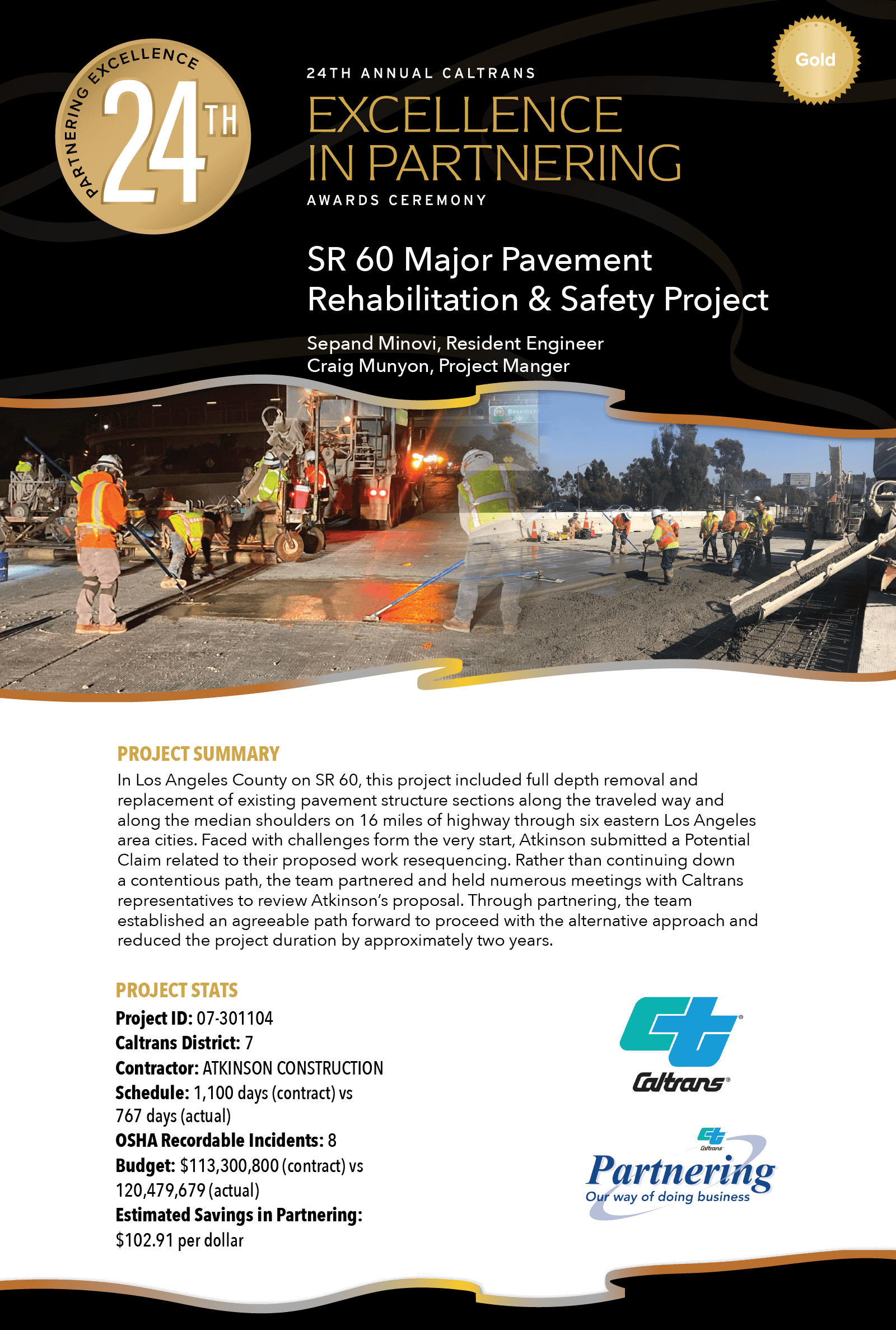
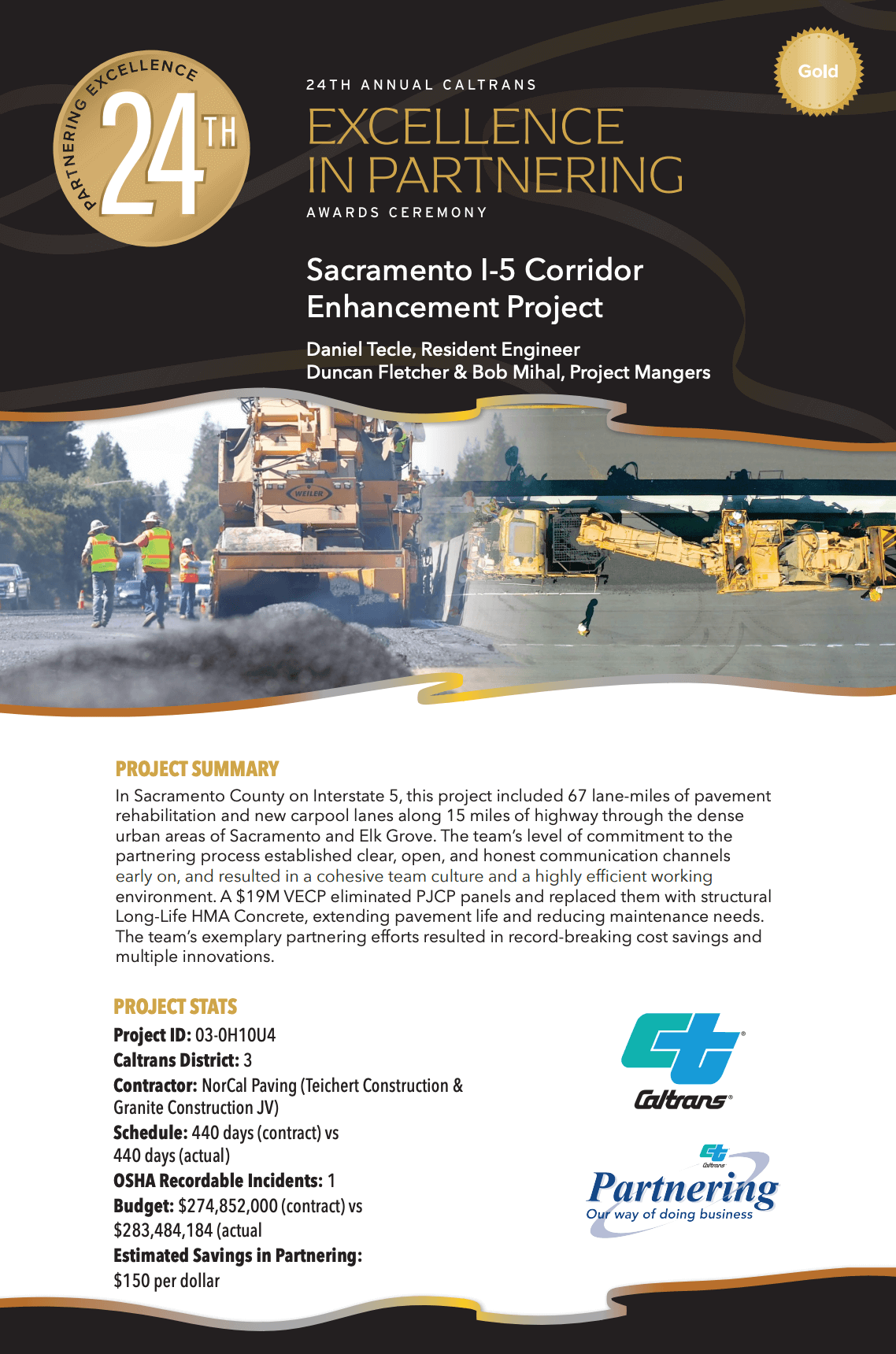
Construction partnering, guided by experienced facilitators, has repeatedly created measurable benefits across public and private projects. The following examples highlight award-winning projects and real-world case studies that demonstrate the value of partnering in action.

Conclusion: Partnering Delivers Measurable Cost Savings and Fewer Disputes

The evidence is clear: construction project partnering transforms how projects are delivered. Across diverse projects, partnering consistently prevented disputes, controlled costs, and ensured projects met or exceeded objectives. Measurable results include $102.91 saved per dollar invested on SR 60, $14.50 per dollar on Imperial Avenue Bridge, and $91.65 per dollar on the I-5 Corridor project.

By establishing alignment early, fostering collaboration, and using partnering facilitators to guide teams within the collaborative partnering framework, these projects were completed more efficiently, safely, and with fewer claims than traditional approaches.

Construction partnering has moved beyond best practice to become a formal part of many construction contracts. It not only reduces project risk but ensures projects are delivered on time, within budget, and to the owner’s objectives.

Looking to Reduce Costs

and Avoid Costly Disputes?

At GLA, we help project teams align early, resolve issues before they escalate, and deliver projects efficiently. Contact us to discuss a partnering strategy customized for your project.

REQUEST FOR A PROPOSAL NOW!